
Episode 523 ·
Lab-Grown Human Brains with Alysson Muotri, Professor at University of California
Today we’re talking to Alysson Muotri, Professor at University of California, San Diego; and we discuss how Alysson is growing brains in a lab, and what’s on the cutting edge of modern autism and genetic research.
All of this right here, right now, on the Modern CTO Podcast!
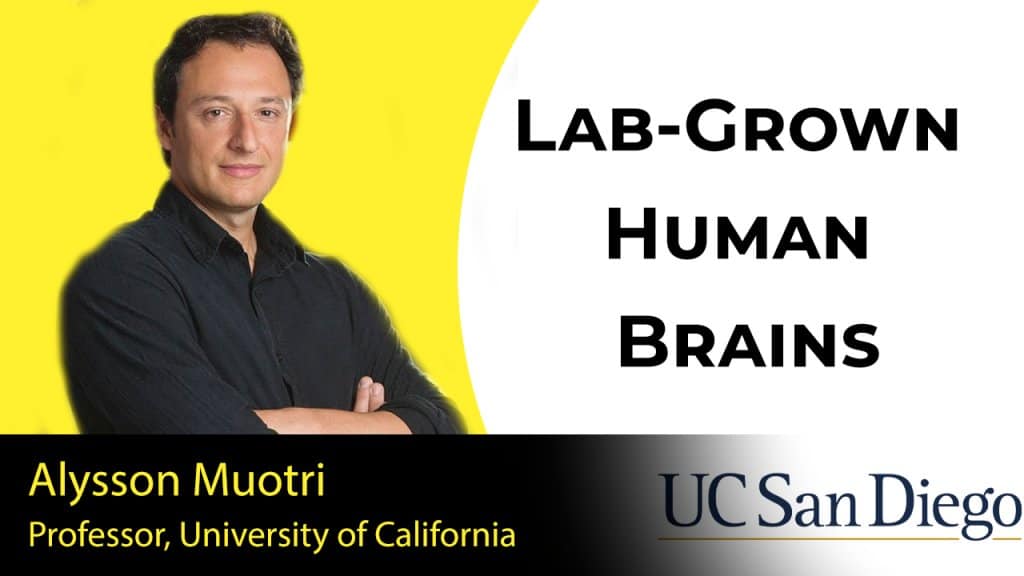
About Alysson Muotri:
Dr. Alysson R. Muotri, a professor in the Departments of Pediatrics and Cellular & Molecular Medicine at the University of California, San Diego, is focusing his research on solving one of life's greatest mysteries: What is it that makes us uniquely human? Research tells us that one of the most influential characteristics of modern humans is our sophisticated brains, and all of the abilities that its complexity grants us. Our unique social brains are one of the key distinguishing factors between humans and other primates. We are even very different from our closest relatives, the Neanderthals, whose brains were limited in their ability to create technology, art, imagination and overall culture. Dr. Muotri is studying the brain from an evolutionary and developmental perspective, differentiating stem cells to recreate "brain organoids" in the controlled setting of a lab.
About TISMOO:
The complexity of the human brain, with thousands of neuronal types, permits the development of sophisticated behavioral repertoires, such as language, tool use, self-awareness, symbolic thought, cultural learning and consciousness. From such dynamic complexity emerged extraordinary technological and artistic masterpieces in a relatively short cultural history. Moreover, brain complexity has a creative purpose. Understanding what produces neuronal diversification during brain development has been a longstanding challenge for neuroscientists and may bring insights into the evolution of human cognition.
The Muotri lab explores mobile elements as generators of diversity during neuronal differentiation. These mobile elements may be part of a conserved genetic core process responsible for evoking facilitated complex non-random phenotypical variation upon which selection may act. The lab uses animal models, neural stem cells, human and other primates’ pluripotent cells and several molecular tools to investigate fundamental mechanisms of brain development, evolution and neural disorders, including Autism Spectrum Disorders.
Transcript
(Intro Narrator at 00:00:03) Hello, my friends. Today, Joel is talking to Alysson, professor at University of California San Diego, and they discuss how Alysson is growing brains in a lab and what's on the cutting edge of modern autism and genetic research. All of this right here, right now on the Modern CTO podcast.
(Joel Beasley at 00:00:24) This is the Modern CTO podcast. So the clickbait title out there is lab-grown brains. Can you explain that to me?
(Alysson at 00:00:39) Yeah. So what we do is we take advantage of the potency of stem cells. So stem cells are cells that we can keep in the lab, and we learn how to induce them to specialize in different cell types of the body. And brain cells is my expertise. So we find formulas or recipes that induce these stem cells to become brain tissue.
(Alysson at 00:01:07) So this is a technology that is not new. I mean, scientists have been doing this for a while now. But I would say that in the past five to ten years is when we really learned how to grow better tissues, meaning that they are more organized, you have more cell types, more diversity. And even at the physiological level, these cells start to communicate more or less as the human brain does. So it becomes a very attractive model for us to study the human brain, which is something that as a scientist we never had too much of these opportunities. We mostly rely on animal models.
(Alysson at 00:01:45) So that stem cell model provides us an alternative right now.
(Joel Beasley at 00:01:50) And from what I understand, stem cells can potentially become any cell, or is that false?
(Alysson at 00:01:55) That is true. They can potentially become any cells. It's just a matter of learning how they do it. And we know for some cells, but not for all. So that's why what we call regenerative medicine, it is still a very experimental field where we are learning how to do those things.
(Joel Beasley at 00:02:12) What's the process to take a cell we don't know and figure it out? What's the process you go through?
(Alysson at 00:02:19) Yeah. Most of the time, we learn from the animal models because we study the embryology of other animals, most of the time the mouse. And we know what kind of factors the mouse body uses to create different tissues. And then we move into the human model and we try to mimic to see if those same molecules would work or not. Sometimes it does, so it's very conserved, but other times it doesn't.
(Alysson at 00:02:48) So we have to figure out other ways. We have to try different recipes, different molecules, different formulations, different exposure times. So very empirically to find these good protocols to make all the desirable cell types or tissues that you want.
(Joel Beasley at 00:03:04) Is there any machine learning type models that help predict this, or is it just guess and check for humans?
(Alysson at 00:03:11) I mean, we are getting better on machine learning or even incorporated AI on how we do it. But I would say that still 90% of the time, trial and error.
(Joel Beasley at 00:03:24) And then what's the difference between brains and brain organoids?
(Alysson at 00:03:30) The difference, first of all, is the size. An organoid is a miniaturized organ. That's the meaning of that word. So it reaches about half a centimeter in diameter.
(Alysson at 00:03:44) So it's a pea size. And the human brain is much larger than that. So we have orders of magnitude differences in terms of the number of cells. The average human brain has 86 billion neurons. In an organoid, we have about 3 million neurons.
(Alysson at 00:04:02) So again, orders of magnitude in differences. In an organoid, we don't have all the structures that the human brain does. So we have sometimes different structures, but they are not necessarily organized in the same way because we don't know yet how to do that. And the organoid is not vascularized. The human brain is fully vascularized.
(Alysson at 00:04:25) You have the nutrients coming through it, and that's why it can expand because you have this vascular system. And also, I mean, it's receiving input from other parts of the body, like the visual system. We are constantly feeding your brain. An organoid doesn't have all those features. So it's still a very primitive structure, but nonetheless, quite useful for some of the questions that we have.
(Joel Beasley at 00:04:50) Yeah, what is it teaching us? What are you using them for?
(Alysson at 00:04:53) Now I'll give you a very clear example from my lab. You might remember in 2015, 2016, there was an outbreak of microcephalic babies being born in the northeast of Brazil. So nobody knew what was causing that. There is one suspicion that there is the Zika virus that might be infecting pregnant women traveling. I mean, the virus was traveling through the placenta, crossing the placenta, and infecting the baby's brain.
(Alysson at 00:05:26) So that was the hypothesis. But how to prove that? So what my lab was able to do, we use some of these organoids and we expose them to the Zika virus. And then we saw that the Zika virus was actually killing specific progenitor cells that give rise to the human cortex, creating a microcephalic cortical layer exactly as it happens in those patients. So that was what we call the proof of causation.
(Alysson at 00:05:56) So we showed that this was the agent causing the outbreak in Brazil, was not something in the environment, was the Zika virus. So that's one example. Most of the time, researchers use brain organoids to study the cellular and molecular alterations in neurological conditions. My lab focuses on autism as well. And several types of malformation.
(Alysson at 00:06:20) So the connection with malformation is very easy to recapitulate in these brain organoids.
(Joel Beasley at 00:06:27) When that stem cell starts to become that organoid, do cells change in the sense that I can make the stem cell make one cell and then that cell will mature and it can make other types of cells?
(Alysson at 00:06:40) Yeah. And, Joel, I mean, the crazy part is that they do it by themselves. So the only thing that we scientists are doing, we are giving them the right environment and a kick start. And all the rest, all the organization, all the specialization in the different cell types, it's done by the cells itself. So it's a self-organization and it's all genetically precoded.
(Alysson at 00:07:05) So again, I mean, we kick start the process and then all the genetic information inside the cells tells exactly how the cells should migrate, what kind of particular neurons should I be, what kind of connections should I make with my neighbors. So this is all genetically encoded in our very early embryogenesis.
(Joel Beasley at 00:07:24) So in these stem cells is DNA, and that contains the instructions for how these cells are doing things?
(Alysson at 00:07:32) Correct.
(Joel Beasley at 00:07:35) What do we know about how the DNA is read and actions are performed by the cells?
(Alysson at 00:07:43) Yeah. So we are still dissecting exactly how they do it, how they can orchestrate, what kind of genes are involved on those self-organization. So there is so much to discover. But now that we have the model, we can systematically analyze that.
(Alysson at 00:08:03) One important information is that I can take these stem cells or I can make stem cells from any person. So meaning that I can do these stem cells from you by reprogramming any cell in your body. For example, we do most of the time from the skin or blood. You just take it to the lab and then we transform these blood cells into the stem cells. And from the stem cells, then we can recapitulate your own embryology or your own neurogenesis.
(Alysson at 00:08:32) So meaning that the tissue, the brain tissue that I can make, contains your genetic information. And by the way, by doing that, for example, with people with neurological disorders, especially the ones that we know the genetics, helps us to dissect how those genes can actually lead to neurological conditions even late in life. I do lots of research with autism. And sometimes, autism in the first year of life, I mean, they seem normal. You do not see any major alterations.
(Alysson at 00:09:05) It's a little bit later in life that you start to notice what we call the phenotypes or the clinical manifestations of autism. So now we have a model to start learning and even individualize for each person, how their neurological problem or condition appears, what causes that. And even more importantly, how to fix and help those people.
(Joel Beasley at 00:09:30) Yeah. I was drawn to the fact that you did work with autism because one of the very first software projects I had worked on, one of the first five, was actually for a company that what they would do is they had papers and had these questions and scales of one to ten, and they worked with autistic children, and they ran them through these tests throughout the day. They had different classes and tests and things that they would take. Then they would do some sort of working with them to help reduce the impact of whatever it was they were experiencing. So if their eyes were fleeting, if they had eye contact issues, they had eye contact exercises, and they would measure it, and it was all paper driven.
(Joel Beasley at 00:10:06) And that was my first experience in anything with autism because they wanted to take this and, you know, put it on a computer so that they didn't have to collect all the papers to get the money from the government or the state or whatever. So that was one of my first experiences because I had to go through and enter in all this information and all of these things. And I got to see the different types of ways autism expresses itself, and it's very different across a lot of people. So because it's so different, how do you sort of identify the root of it?
(Alysson at 00:10:38) Yeah. So that's a great question. So we start recruiting people with different clinical outcomes and some people more severe, some people less severe. And we start by first looking at their genetics. So we know that there is a strong genetic component.
(Alysson at 00:10:53) So we can sequence their genome, we can read their genome, and trying to figure out what are the genes that are mutated. And then, I mean, we make a catalog of those mutations and we start comparing the alterations at the several levels in the brain organoids with the clinical manifestations. So that starts, I mean, by doing that over and over, we are collecting lots of genes. And now we have over a thousand genes implicated in autism that explain why it's so variable. But again, I mean, by studying one by one, we know exactly what that gene is doing and how it might contribute later on, why this one is more severe than the other, because sometimes the perturbations in these very early stages of development are more dramatic in some cases than others.
(Alysson at 00:11:42) So that's very time-consuming experiments, but I think the outcomes are amazing because you can really tell the function of the gene in these very early stages of embryogenesis that otherwise we would not have access. I mean, we cannot do experiments in humans, especially in utero. So we have an inaccessibility to understand how the brain is formed at very early stages. But now creating this brain tissue outside the uterus, inside the lab, allows me to dissect and to analyze what the cells are doing both at the molecular level, at the cellular level, and even more importantly at the network level, how they are communicating to create who you are.
(Joel Beasley at 00:12:29) What do you know about how cells communicate with each other?
(Alysson at 00:12:33) Yeah. So neurons do that very well. So neurons are very specialized cells that have this ability to pass information one to another. And they do that by creating very specialized structures in their membranes that we call the synapses. So the synapses are the point of contact between two neurons.
(Alysson at 00:12:54) And lots of these genes that I told you that are implicated in autism, they code for proteins that are exactly there at the synapse. So by having a malfunction of synapses, you can imagine how you're going to lose information throughout your network because the synapses are not functioning well. It's interesting that in one hand, we have mutations that cause malfunction of the synapses. In another hand, we have mutations that actually cause an over-function of synapses. So that person accumulates way more information than he needs and he cannot prune it down to have only the essential information.
(Alysson at 00:13:36) So that's when we start seeing people with these remarkable abilities that are able to memorize lots of things. And this is quite common and quite frequent in the autism community. I mean, it's not everyone, but there are some people with these remarkable abilities. And when you check what their brain cells are doing, I mean, this is some of the insights that we are having. They are forcing the synapses to overwork.
(Joel Beasley at 00:14:02) That's unbelievable. It's so neat. You know, aside from this specific conversation, there's so many different things happening in so many different fields. It's a real pleasure to be alive at this point in time, and I look forward to people like you doing work in areas like autism that is going to ultimately help the quality of life for humans with this research. So I have a lot of respect for you there.
(Joel Beasley at 00:14:28) We'll take a break from the conversation about the cells and everything. I want to talk a little bit about you as a human. You've accomplished a lot. You're doing really great work to help move humans forward, and it's pretty fascinating. My brother and stepmom are both physicians, so I grew up around it, but I am not one.
(Joel Beasley at 00:14:44) And the amount of work it takes to become a physician or a scientist of that level, it's extreme. It's extraordinary. It's a lot of work. It takes a lot of discipline. A lot of the people that listen to the show, they're listening because they want to grow their careers.
(Joel Beasley at 00:14:57) They want to improve. They want to become better. They want to learn from people who are doing difficult things and doing things well. So I'm curious, what are your thoughts on how you have been able to get to the level of your career that you've gotten to?
(Alysson at 00:15:12) Yeah. That's a great question. I would say that I was always very intrigued by nature. I always like to be outside and ask questions. And then also about common things, to the point of starting to embarrass the adults in my family.
(Alysson at 00:15:29) Right? I think the first time that I remember that I really applied a scientific method was when I asked someone about light. I mean, well, how can I—and this was probably when I was three, four years old. How can I push the switch here and the light is on? I mean, what happens?
(Alysson at 00:15:48) Can you explain this to me? And then, of course, I mean, you ask a layperson who has a difficult time to explain that. And then I remember, well, I have to figure this out by myself, look into the books and see. When I finally figured out, I mean, oh, yeah. That's—now I understand.
(Alysson at 00:16:05) Now this is electrons, things like that. Probably super high level for my age, but I think what I gained there was, well, I mean, if you do your research, you end up with an answer that might be the best thing that you can have at that stage. And then I started applying that for all my life and everything else. So it becomes a very critical, rational way of finding the things that you are interested in. And then, I mean, I understand there's lots of years and lots of hard work and discipline to become a physician or a PhD or a faculty in a university.
(Alysson at 00:16:43) But I would say that for my life, I just passed through it because I was enjoying all the moments, all the steps. And I didn't feel that it was hard. On the opposite, I always felt that I was doing what I love. So I think that helped to reduce the burden. There were moments that were very difficult, all the tasks, all the content that you have to learn.
(Alysson at 00:17:09) But I would say that this was minor compared to all the resources that I was exposed to, all the fun that I was having by doing science and learning about science. So at the end of the day, and that's what I tell to my students, I mean, you really have to love what you do because by doing what you love, you make your work as a hobby. And then I think you have fun during the process. Yeah. That's more or less how I feel.
(Joel Beasley at 00:17:39) That is absolutely the trick to life: to put yourself into something that you love or you're really curious and you're continuously interested in. Like, for me with this podcast, this was not my source of revenue. This was an expensive hobby for two years that has somehow turned into this company, and this media company is pretty crazy. But I was sort of doing other things while I was doing it, and I just kept doing it, you know, hundreds of episodes and hundreds of episodes, and it turned into something.
(Joel Beasley at 00:18:06) And then I look back, and I'm like, honestly, I've worked so hard at so many different things that didn't work out. And this one, I just did consistently, and it kind of happened. But yeah, I love your energy and your mindset because I don't see it a lot. And when I do see it, it helps me realize that I can be the optimistic, happy person even further into my career.
(Joel Beasley at 00:18:31) Because to be honest with you, I see a lot of people who are farther on in their career than I am who, like, they're good at what they do and they're known for what they do, but they aren't necessarily happy and optimistic. They almost seem a little jaded by it or something. But I love meeting people like you because it restores my faith in the future that I desire.
(Alysson at 00:18:51) I'm glad. I'm glad.
(Joel Beasley at 00:18:53) So how far are we from being able to create a full-size human brain?
(Alysson at 00:18:59) You know, I think on the technical side, I don't think we are that far. And I'll go even beyond. I think that in the next, I would say, 10 to 15 years, we might have not only the brain, but the brain connected with other tissues, kind of a whole body connected so we can study it like an avatar of a specific person, having either miniaturized or even the real size if we think that it's important to have a real size functioning in the lab. So I think the technology is moving fast, and I don't think that this is a future that we won't see. We'll definitely experiment that in our life.
(Alysson at 00:19:42) So we're going to see those things happening. And I say that because of the experience that we have in the past five years. I mean, getting from nothing to where we are now, it was amazing. It's amazing progress, and more and more labs are dedicating to this type of stem cell work.
(Alysson at 00:20:01) So I see a future that's very near where we can have those answers. And then there are consequences of that as well. You said, well, what about the whole-size brain? Sometimes you don't want the whole size because it takes more resources, right? The organoid, the beauty of that is that when I make an organoid from a person, I don't make just one.
(Alysson at 00:20:23) I make thousands of organoids. So I can do different experiments with them because they are tiny. So now if I start moving into a bigger size, I can answer some questions, but I don't think I'll have the same throughput to do all the experiments and conditions that I would like to try. So there are gains and losses by increasing the size of those structures.
(Joel Beasley at 00:20:49) Now for me to understand a little bit better: So you said that there's been a large increase in the past five years of advancements. How long have you been studying and practicing in this field?
(Alysson at 00:21:00) It's hard to put a date on it because again, when you are inside this field and this has been evolving slowly, you are always part of that. So I would say like 20 years.
(Joel Beasley at 00:21:14) Okay.
(Alysson at 00:21:14) But then when we start having tissues that really work like the brain, things like that, I would say 2014, 2015. And since then, in 2019, we started generating what we call a brain wave, which is exactly what you get by placing the electrodes in an electroencephalogram. You've probably seen people with epilepsy or when you go to hospital, they put electrodes in your brain, they record all these different frequencies. These are all the communication within your brain. So in 2019, we made these brain organoids generate the same type of oscillations that we see in the brain.
(Alysson at 00:21:53) To me, that was a major milestone because before that, we had the structures but not the function. After 2019, we start having the function of these organoids. So I think it was quite fast. In a couple of years, we were able to optimize the structure to gain the functionality of these structures. And this is true for the brain, but it is also true for other systems. Two years ago, someone in another lab was able to create insulin from a pancreas organoid.
(Alysson at 00:22:26) So before that, we had the pancreas, but they were not producing insulin. So now we have a pancreas that produces insulin, so it becomes functional. So that's what I mean, that we are accelerating the pace of discovery in the past five to ten years.
(Joel Beasley at 00:22:41) How do you approach—like, ethics is always a big conversation. How do you even begin to think about it?
(Alysson at 00:22:49) Yeah. So the studies with the brain tissue and brain organoids, they really touch these ethical concerns. And I think the major concerns that people see is: what if those brains start to become self-aware and have some level of consciousness, right? So how should we treat them? Should we treat them as a person?
(Alysson at 00:23:13) Should we treat them as a research animal? Or should we give them a different moral status? I think eventually these organoids are becoming more and more complex that I think it's going to be inevitable for them to reach some level of consciousness or even self-awareness. But I don't think they deserve the same moral status as a person. So we have to agree, I mean, what to do with them.
(Alysson at 00:23:39) And that's why we do this research in collaboration with the ethicists and philosophers of the mind. So we are always in constant check. Where is this technology? Should we discuss this more? Should we bring more input from society?
(Alysson at 00:23:55) So I'm doing this every two years. I organize a meeting where we discuss those things. And right now I don't think we have to worry about it because they are not at that level of reaching self-consciousness, but it might be in the future. And then we'll have to agree on how do we work with them. Because I think most people agree that this is a very important research tool that can help us to create new treatments for millions of people that suffer from neurological conditions, psychiatric disorders, things like that.
(Alysson at 00:24:30) So the benefit to humanity is very clear. Any layperson will agree with that. But then we have these ethical concerns. How should we deal with that? And there is no clear answer right now.
(Alysson at 00:24:45) So this is something that is not in the philosophy books. I talked to my friends that are philosophers of the mind. They have been studying the human mind for a while, animal minds, things like that. And when I talk about brain organoids, they pause and they say, "Well, we never thought about that." So we are bringing something new to the philosophy books as well.
(Joel Beasley at 00:25:09) Yeah. Well, there's a lot of hard problems in there. The first being we don't even have a great definition for consciousness. We don't even know a whole lot about it. But I could definitely see how you could be making maybe blood cells or pancreas cells, and people don't have that concern. But the moment you go into a brain, which we imagine is where consciousness is coming from, that starts to raise those. But, you know, for me personally, where I'm at with my ethics stuff for the little bit that I know about this is I'm an explorer, man. I'm an adventurer. And a lot of these things, if you look at the federal government with things like seat belts and car safety ratings—these things happen in hindsight, right? First, you get the car, then the accidents start happening, then you figure out how to mitigate the accidents. And that tends to be how things flow. So there is a whole entire camp of people that will say, "We shouldn't be playing God. We shouldn't even go over there. We shouldn't even be doing that." I'm not in that camp. I'm in the camp of let's push the boundaries of what's possible. And then, you know, in my experience, people like you and these people that are pushing the boundaries, they're moral people.
(Joel Beasley at 00:26:16) And if they start to see something that's not right, they're going to start bringing it up to their peers, and we all know scientists and how they rip each other apart. So I don't think there's any conspiratorial aspect to it. But, you know, then you figure it out. Like, if you are working in your lab next week and you start noticing—you have a brain-computer interface hooked up to one of these organoids, and all of a sudden text or speech starts coming out of it and they're talking to you like, "What's going on, Alysson?"—you're going to be like, "Hold on a second. No, no. We need to have a conversation about this with some other peers and figure out what we do about this," you know?
(Alysson at 00:26:51) Yeah. And I mean, to be honest, science history has shown the same thing. I mean, blood transfusion, you can imagine, many people didn't want to receive blood from other people even when they were super sick. But then you start showing that, well, this can save your life. And then, yeah, your concern kind of reduces. Organ transplantation—there was resistance in the beginning. "Oh, I don't want a heart or a tissue from another dead person in me." Well, I don't think people who need it now think that way, and that helped us to really move forward with the technology. So the resistance is normal for something new, for something that people are not used to. But as soon as you start proving that it's useful and it's saving lives, yeah, then I think the tendency is to put aside any of these concerns.
(Joel Beasley at 00:27:47) And I'm an entrepreneur, so I'm always curious. What's the business side of things? What are you getting paid to do? Or is it a research grant? Or are you trying to achieve some sort of outcome and solve some problem? How does the money aspect of all of this work?
(Alysson at 00:28:02) Yeah. So I'm involved with several companies as well. Those companies, for example, one of them is using these brain organoids to test specific drugs or gene therapies for different neurological conditions that have a genetic cause. So they do a screening, they look for new potential treatments that are better, that are more efficacious, that are personalized. So that's one company that's making money doing that.
(Alysson at 00:28:33) So instead of screening in mice, we are screening already these new treatments in a brain organoid that we think is more relevant for neurological conditions. So perhaps the next treatment for schizophrenia, the next treatment for autism might come from a brain organoid rather than from an animal model. So that's one side. I have another company, for example, that is using this technology to expand the way we grow cells and specialize the cells for other types of tissues. For example, meat that you can create from the stem cells.
(Alysson at 00:29:09) Instead of making brain cells, we are making muscles from different species. So maybe by doing that, we can precisely control the nutrients, the amount of fat and protein that you have in your meat. And we do that without killing any animal. So that's another way that you can see the commercialization aspect. But most of the companies in that area are really looking on the therapeutic side, trying to help people with diseases that have no cure right now.
(Alysson at 00:29:40) So I think that's where, at least, the first wave of companies using this type of technology is focusing on.
(Joel Beasley at 00:29:49) I have gotten to talk to—I think about two or three years ago was the first time I had a conversation about it with someone who was growing salmon, and they were only growing the part of the salmon that you would eat. And they were trying to get the cost down. So they had gotten it down from $200,000 an ounce to $50,000 in a year or two, and then they were trying to get it down to market price so that you can just have this salmon. And he was sharing with me that there were competitors that were doing it with chicken, and there are different companies popping up doing it for different types of food. And a company will pop up and focus on one specific type.
(Joel Beasley at 00:30:26) And there was this one that had done chicken. They were trying to get it certified—we have the USDA here or whatnot, some sort of regulatory passing. But they found in another country, they let them through. And so at certain restaurants, you would get this chicken, and it would be lab-grown chicken. And I thought that that was fascinating that that was already out there in the wild happening today.
(Alysson at 00:30:55) Yeah. No, absolutely. And I think most of those companies, the major goal is really to push the cost down. Because we are still at a scale that's kind of gourmet scale, but we really want to produce that, like, as Gatorade, right? Something that you can just have available for everyone. And I think this might help lots of problems with the ecosystem in the world. So the impact of something like that is huge.
(Joel Beasley at 00:31:24) Where do these stem cells come from? Are you just taking them out of yourself and growing these brain organoids, or are people stealing them from some other place? Where do you get them?
(Alysson at 00:31:33) We take from cells that come from a skin biopsy or sometimes from blood or sometimes even from the milk tooth that you can give it to me and I can extract some cells. It doesn't matter the donor cell type, the origin of the cells. Once I have those cells in my lab, I can use what we call cellular reprogramming to convert whatever cells I have into stem cells. And they capture your genome, so the genome is preserved. I just change the nature of the cells. Instead of a specialized cell, now I have a cell that is naive. It's a stem cell, and I can again manipulate and grow tons of it using the technology that we have.
(Joel Beasley at 00:32:15) Where do you get them from? Like, people donate this?
(Alysson at 00:32:19) We recruit people most of the time. Because we have our research going. For example, with autism, first, I started recruiting the families. But I always wanted to study profound autism. These are more severe types of autism. And the problem that I had was the family said, "Oh, we want to participate because we want you to study our child, but it's very hard for us to go to your lab." And then I had an idea. I said, "Okay, well maybe the lab can go to you." So we created a kit where we have a little bit of a media or a container where you can put the milk tooth. And we call that the Tooth Fairy Science Kit.
(Alysson at 00:33:06) And then through social media, we start sending this Tooth Fairy Kit to all the families with autism. And we are targeting this pediatric population. They are losing their tooth. And as soon as they lost it, they just put it in the tube. It has the media that keeps the cells alive, and then they will send these vials to us, and that's how we would collect these cells.
(Alysson at 00:33:29) Of course, they have to agree. There is a consent form where we explain the science. They have to sign. They have to agree to participate on the research. But that's how we start collecting cells. And it was so successful. I don't think any families refused to do that. On the opposite, they all wanted to participate. In the first year, I think we collected over 3,000 samples that we didn't have the capacity to actually do it. So we have to slow down and stop collecting more and more cells.
(Alysson at 00:34:00) So we have plenty.
(Joel Beasley at 00:34:01) That is so cool. And then let's imagine that you figure out the root of this autism, and you're like, you know what's causing it specifically. Do you think it's something that cells can be reprogrammed when they're embryos or when they are born? Or do you think it's something where you would just know how to identify it and be able to scan the existing eggs, you know, maybe select certain ones that won't have it for in vitro or something of that nature?
(Allison at 00:34:30) Yeah, Joe, that's a great question. But before I answer that question, I want to make sure that we are talking about the severe types of autism, okay? Because this population is so heterogeneous that there are people that are high functioning.
(Allison at 00:34:45) So they have jobs, they have families, they don't even see autism as a problem. Sometimes they see it as a superpower that they have. So this population, they don't want to be treated. They don't want to be cured of anything. They don't think that they have anything that is problematic.
(Allison at 00:35:04) So we're not targeting those. Just for the audience to be very clear on that. So we are targeting the ones that are severe. So we are talking about people that have hundreds of seizures per day, people that cannot walk or talk, that cannot feed themselves, that need one-to-one help for life. So these are people that are very dependent on the community, on their parents. And when their parents are not there, so what should we do?
(Allison at 00:35:35) So we are targeting those people. We want to make them as much independent as possible. So they and their families, not only they seek for a treatment, but they deserve a better treatment than what's out there. So having said that, having clusterized my target, to your question, the answer is yes. All the data that we have, both with animal models as well as the brain organoid model, suggest that if you know the genetic alteration and if you correct the genetic alteration in the cells, you basically revert back to what we call a typical or a normal development.
(Allison at 00:36:20) So this is what we are trying to do in people right now, because it's much easier to do it in a lab, both in animals or in the organoids. But now moving to a clinical application, there is a challenge, again, because the human brain is so big. We have to target so many cells. And there are certain things that we can do with mouse, such as genetic manipulation, that we cannot do with a human that is already born. So the challenge now is how can we translate the applications or the treatments that we know might have a beneficial contribution to that person. How can we actually deliver it into clinics? And that's where some of these companies are trying to bridge. They're taking the technology that we have in the lab, and they are bridging to take it to the clinical side, performing clinical trials, learning by doing these clinical trials how to best implement this type of technology. That's where we are right now.
(Joel Beasley at 00:37:21) What, under a microscope or through a test, allows you to see that it's autism, like, across the board? Like, what's the unique thing that they have in common that's different from somebody who doesn't have that at all?
(Allison at 00:37:37) Yeah. So there are certain things that seem to be a convergence, meaning that they all have, in some level, some of these alterations. When you look at the cellular level, usually the neurons, or these specialized brain cells, they have a different morphology. So the morphology already has an indication that there's something different there. Even sometimes the size of the cell is slightly different.
(Allison at 00:38:04) So we're talking about sometimes, I mean, 10%, 20% differences here. But it's enough to place them in a category of, well, this is not going to be your neurotypical development. There's something that might go wrong here. The other thing is what I mentioned to you, the synaptic contact, the way they transmit information, either malfunctioning or functioning super well, that is not normal as well. So there is no pruning, things like that.
(Allison at 00:38:36) So those usually are the two things that we see that are quite common among this population.
(Joel Beasley at 00:38:42) Okay. And so the neurons and their transmission abilities and the characteristics of those, how do you test those?
(Allison at 00:38:49) That's a good question. So we can place these organoids on top of what we call a multi-electrode array. And similar to an EEG where you place the electrodes in your skull, here we are placing the electrodes directly inside the organoid. So we can capture the electrical activity. And by looking at this electrical activity, we can tell how good they are on making the synaptic contacts.
(Allison at 00:39:17) So that's one way to do it. There are other techniques that are more precise. You can actually go inside a single neuron, and you stimulate that neuron and see how it passes the information to the next one. So we can do that as well. And then there are techniques now that you can paint one cell, or you can paint the synapses with fluorescent dyes, and you can just visualize them.
(Allison at 00:39:41) Then you can quantify how strong, how big they are. So there are things that you can do under the microscope using fluorescent dyes.
(Joel Beasley at 00:39:50) That is so cool. And so you had all these people that are affected by this send you, like, teeth and things like that. Well, how do you categorize it? What's the scale that the medical community uses to describe the extremeness of the autism? Because, I mean, I'm sure you don't treat every tooth as the same because you have to know, like, how it's expressed, right?
(Allison at 00:40:14) Yeah. Yeah. So the first thing is, look at the clinical side, right? I mean, if the clinical side or the symptoms of the patient is really dramatic, then, I mean, you know that there is something more severe going on. And sometimes that's how we select the patients for our research. We just look for the ones that have what we call endophenotype. So they are nonverbal, or they have the strong repetitive behavior, or they are very aggressive. So we select for those to cluster and try to correlate with our findings on the most severe types. That's how we do it most of the time.
(Allison at 00:40:53) There are other types of research that are more unbiased towards who the person is. So we don't have that information. We just look for their genomes and their cells. And then we try to anticipate, based on that, how the person would behave. So these are the two types of research that we do.
(Joel Beasley at 00:41:17) That is so cool. It's hard, I think, for, like, a layperson. All right? Like me, like, I'm not really into it. But then when I was doing the prep for this call, the team was like, well, you kind of have to be really clear about things. And so I was so happy, though, that you were able to have this conversation with me and help me have a better understanding of this world and how the technology is growing and improving. So thank you so much. Is there anything that you want to get out there to the world that we haven't yet covered?
(Allison at 00:41:49) I think we covered it all. I'll just highlight the benefits of this research, which is, I mean, really to help people. And I think what most scientists want to do is to have this kind of a contribution. So that's my dream. It's the dream of my colleagues. It's really to move everything that we learned from the bench side to clinics. So that's where we want to make the most of this technology.
(Joel Beasley at 00:42:14) Thank you so much for listening. And if you found this episode useful, please share it with a friend or colleague who you think would get value from it. And if you have topics that you'd like to hear discussed on the podcast, either add me on LinkedIn or send me an email, joel@moderncto.io. Every time I get an email or LinkedIn message, it absolutely makes my day and inspires me to keep going.